Now, let us say you have an idea, a spark of inspiration to create something marvelous—perhaps a field kit for biology or a hands free device for speech to text. Yet, you find yourself stranded on the desolate island of inexperience, far removed from the bustling cities of electrical engineering and computer science. Without this knowledge, the path to realizing your idea seems treacherous, filled with the pitfalls of professional help, which is as costly as it is elusive.
Faced with such a predicament, one typically contemplates a few courses of action: seek out and hire a wizard of circuits, enroll in years of schooling to arm oneself with the necessary knowledge, or, disheartened, abandon the project altogether, stymied by the high walls of cost and expertise. Hiring an expert is a hefty affair, and the pursuit of formal education demands both time and treasure—commodities that are often in short supply for the eager maker.
This is where Arduino steps in, a knight in shining armor, ready to rescue you from the clutches of despair. Arduino, conceived in the early 2000s, emerged from the minds of those who saw the need to dismantle the barriers to electronics and coding. Before the dawn of Arduino, many designers turned to the BASIC Stamp—a microcontroller platform that was simple and user-friendly, yet carried the burden of expense and limited programming capabilities.
Interaction Design Institute Ivrea Building (2001-2005)
The tale of Arduino begins at the Interaction Design Institute Ivrea (IDII) in Italy (shown above). It was here, in 2003, that Hernando Barragán crafted the “Wiring” platform as part of his Master’s thesis, aiming to simplify programming for artists and designers. Wiring utilized the ATmega128 microcontroller and drew inspiration from the Processing IDE, developed by Casey Reas and Ben Fry. Hernando Barragán, who developed Wiring as part of his Master’s thesis, was advised by Massimo Banzi and had access to and inspiration from Casey Reas. This platform laid the groundwork for what would eventually become Arduino.
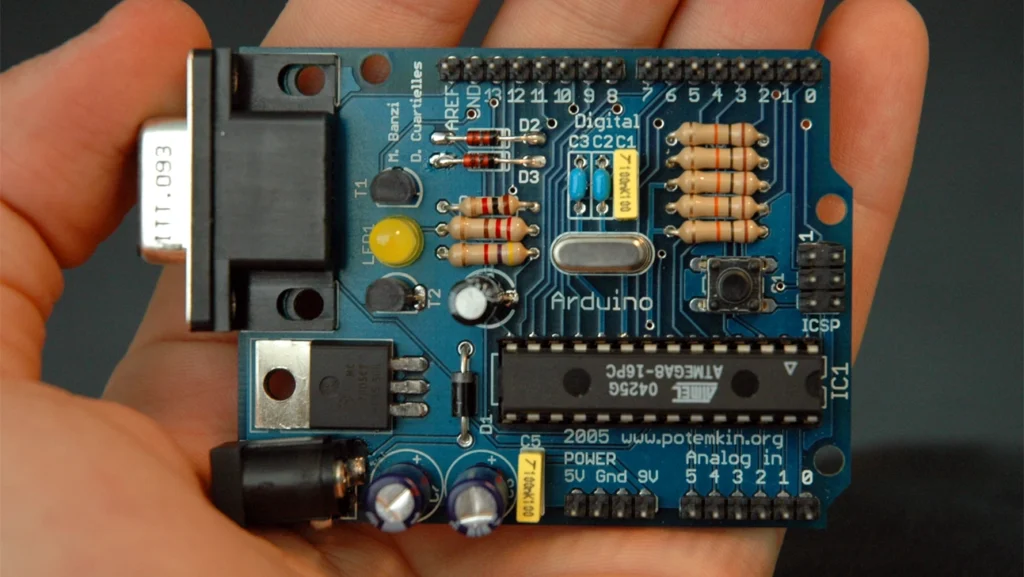
In 2005, Massimo Banzi and his compatriots, including David Cuartielles, Tom Igoe, Gianluca Martino, and David Mellis, forked the Wiring project and adapted it to support the more affordable ATmega8 microcontroller, thus creating the first Arduino board and IDE. Their mission was clear: to provide a low-cost, accessible platform for students and non-engineers to bring their digital projects to life. The open-source nature of Arduino’s hardware and software only accelerated its adoption.
An early Arduino board with an RS-232 serial interface (upper left) and an Atmel ATmega8 microcontroller chip (black, lower right).
Arduino presents a treasure trove of tools, including an integrated development environment (IDE), approachable hardware, and a supportive community. The Arduino IDE, influenced by the Wiring IDE, which itself was modeled after Processing, simplifies the coding process for the microcontroller, making it accessible for beginners. The hardware, with its myriad input and output pins, allows users to connect sensors, actuators, and other components to build interactive projects.
One of Arduino’s most compelling features is its affordability. An Arduino board can be procured for a mere handful of dollars, and comprehensive starter kits—replete with various components—are available for around $30-$40. This accessibility enables a wide array of users to dive into experimentation and learning without delay.
Powered by Arduino
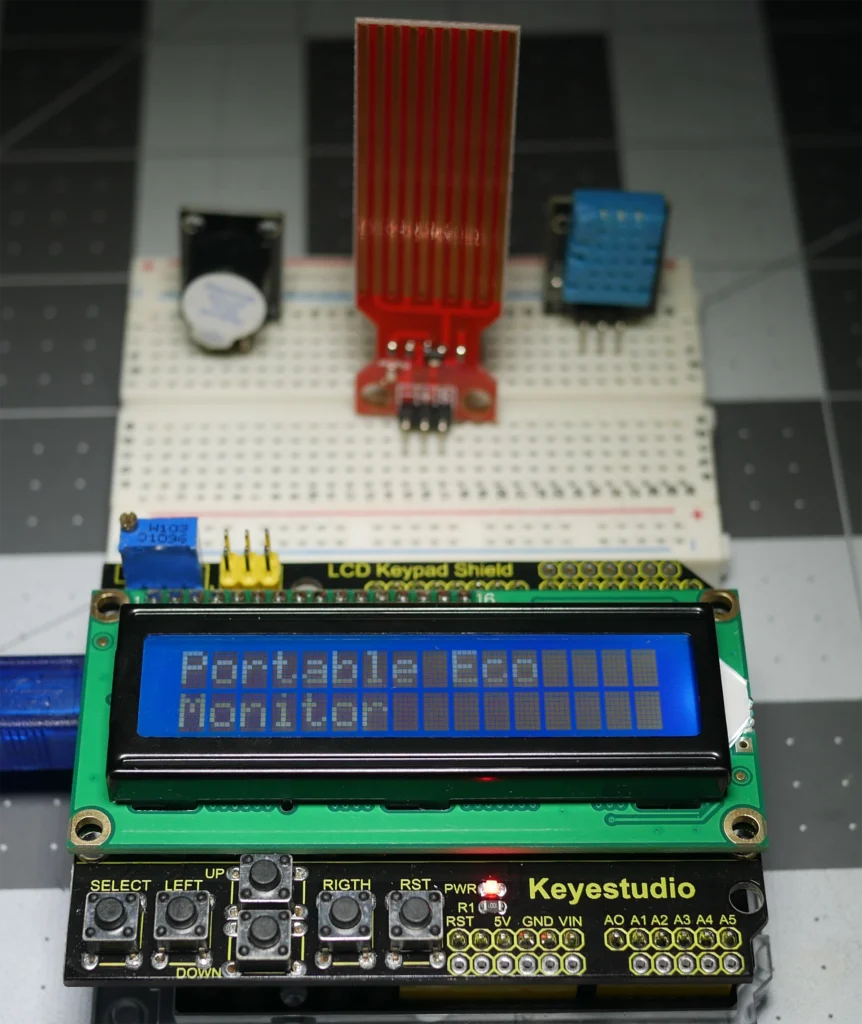
A 1602 LCD shield stacked on top of an Arduino Uno. Uno and shield shown separately below.
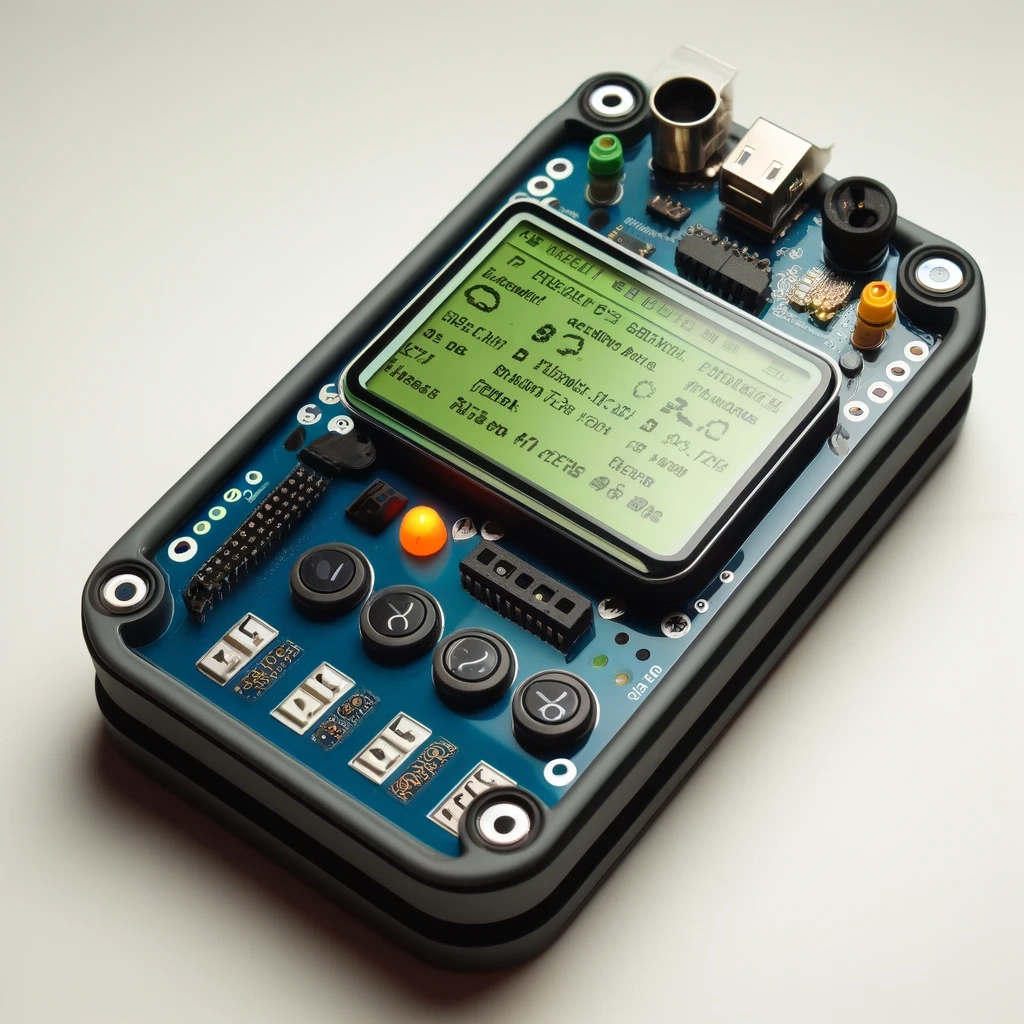
This is where Arduino shines as the backbone of your project. Arduino is an open-source electronics platform that makes electronics accessible. Arduino is known for its and adaptability, making it the perfect tool for building projects like the Portable Ecosystem Monitor.
Starting Point:
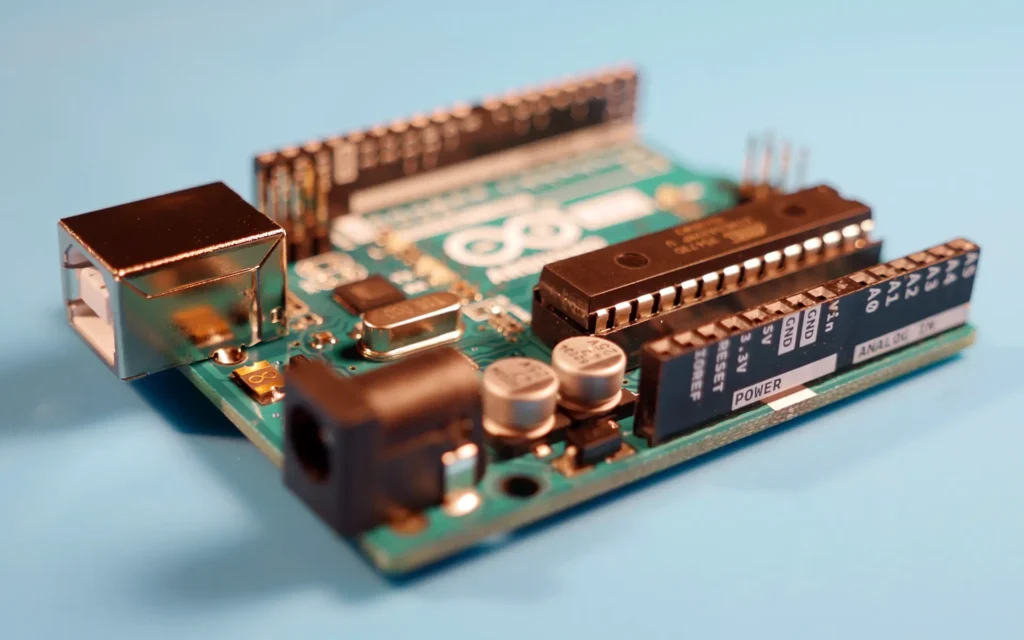
You begin with an Arduino board, the central brain of your device, capable of connecting to a variety of sensors to measure temperature, humidity, light, or pH levels, all controlled by the Uno. While there are many Arduino boards suitable for beginners, the Arduino Uno is the most common starting point due to its versatility and ease of use, making it a popular choice for those new to electronics and programming.
Arduino Uno Rev 3
Coding with Arduino:
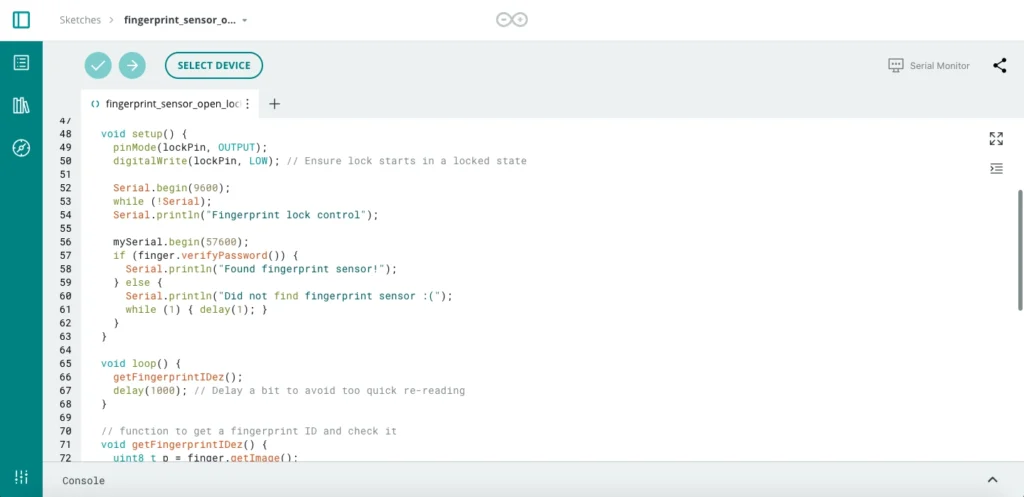
Using the Arduino Integrated Development Environment (IDE), you program the board to read data from these sensors. The IDE is designed to be user-friendly, providing you with code examples and libraries that drastically simplify the programming process. Even if you are not a coder, Arduino helps bridge that gap, allowing you to set up and configure your project with basic coding principles.
Arduino Cloud IDE
Building the Interface:
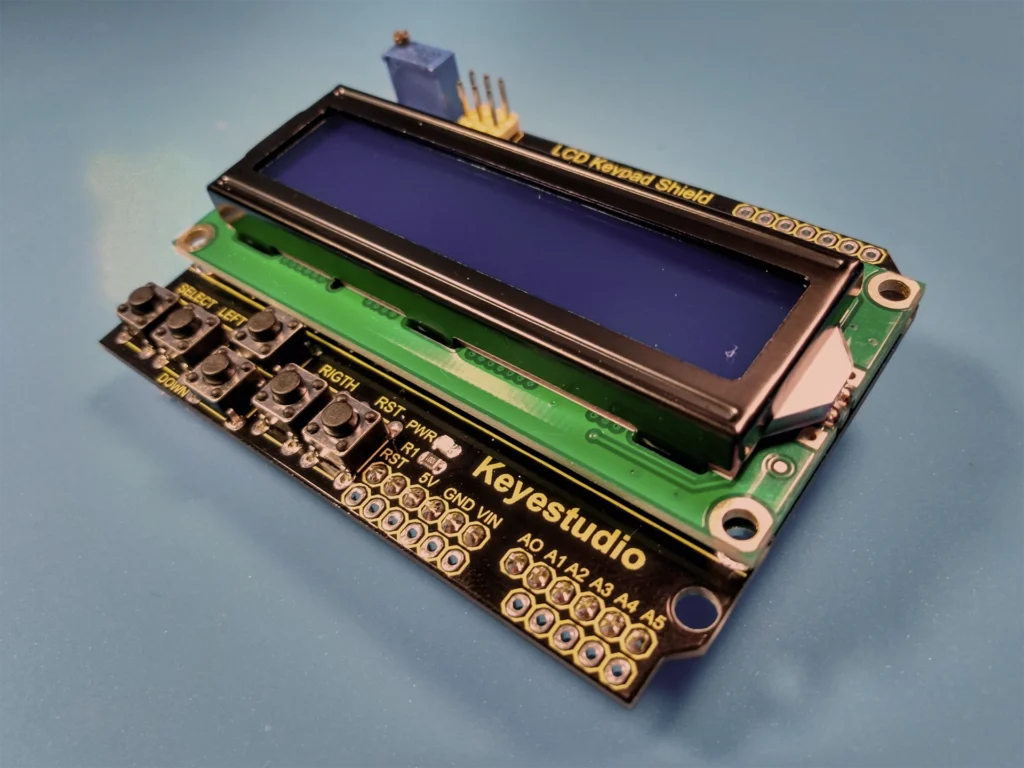
The LCD display connects to the Arduino, showing real-time data collected from the environment. You use simple commands in the Arduino IDE to control what and how data is displayed. Buttons integrated into the system allow users to navigate through different data metrics, making the device interactive.
Keyestudio 1602 LCD Shield
Alert System:
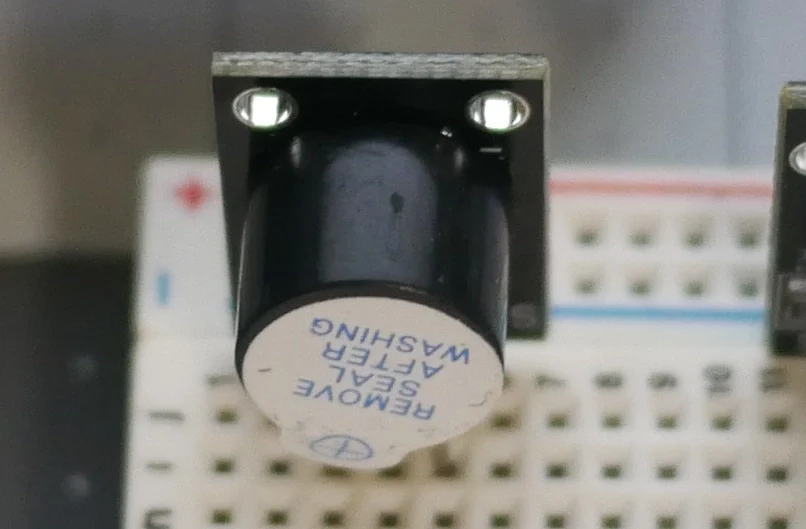
The buzzer, controlled by the Arduino, is programmed to sound alerts when environmental readings fall outside of preset safe or optimal ranges. This feature is crucial for preventing potential damage in sensitive ecological areas or ensuring the best growth conditions in agriculture.
Buzzer
Arduino empowers users by placing the tools directly in their hands. As you embark on building projects, you gain knowledge and confidence, fueling a cycle of continuous creativity, productivity, and iteration. This endless loop of creation and learning encapsulates the Arduino experience. Each project completed sparks new ideas, leading to further experimentation and development. You build something, learn from it, and then improve upon it or start anew with a fresh concept. This iterative process not only enhances your skills but also feeds your creative hunger, pushing you to explore and innovate continuously. It removes financial and experiential barriers, offering a new avenue to explore and realize your ideas—a phenomenon the Arduino community fondly refers to as “the Arduino way.”
By simplifying the intricacies of electronics and coding, Arduino has unlocked a realm of possibilities for hobbyists, students, and professionals alike, enabling them to breathe life into their creative projects.

.jpg)